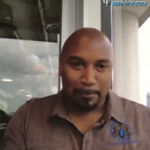
Solving the Hardest Problems in the Silicon Trenches: Lessons from Michael Choate
“The best engineers aren’t just problem-solvers—they’re detectives, psychologists, and visionaries all at once.”
That insight captures the spirit of Michael Choate, president of Solutions Press, veteran engineer, and author of Silicon Trenches. With a career spanning decades in the semiconductor industry, Mike has seen it all—from debugging high-speed printers to diagnosing vibration-induced yield drops in clean rooms.
In his conversation with Industry Ignited host Dr. Leanne Aguilar, Choate shares timeless lessons in critical thinking, leadership, and why he’s now blending engineering precision with creative storytelling about the future of AI.
From the Help Desk to High-Tech Labs
Before AI and automation transformed customer support, Michael was on the frontlines of what he calls the real help desk—where engineers answered phones, diagnosed issues on the fly, and owned the outcome.
“There were no scripts, no bots, no transfers,” he recalled. “If someone called with a problem, you pressed **3, took the call, and solved it. We followed up until it was fixed.”
Today’s call centers, he argues, too often prioritize speed over quality. “Agents are measured by how many tickets they close, not how well they solve problems,” he said. “That’s why I call many of them no-help desks.”
Choate’s advice for modern support teams? Empower agents to think critically, not just follow scripts. “Escalate intelligently. Learn from recurring issues. And if you can’t fix it, find someone who can.”
How Memory Became a Competitive Advantage
One of Choate’s early breakthroughs came from an unlikely skill—memory training. Tired of putting customers on hold to look up long part numbers, he began memorizing them using a four-step mental framework:
Visualize the data (numbers, sounds, or symbols).
Assign meaning through a mental label or phrase.
Prioritize the memory for future recall.
Practice retrieval like setting an internal alarm.
He laughs when describing how this changed his work:
“Customers thought I had supernatural powers. I just trained my brain to store technical data like an image library.”
That skill later became invaluable as he managed complex engineering projects requiring instant recall of intricate specifications.
Quality and Reliability: Lessons from the Field
Choate’s deep experience in semiconductor quality assurance taught him one thing: perfection is a moving target.
He recalls halting shipments for a high-speed printer after discovering that a “minor” supplier change in a machined part led to improper printing. “It wasn’t a design flaw—it was a documentation flaw,” he said. “The parameter that mattered most wasn’t even written down.”
He emphasizes that ISO 9001 certification, while useful, doesn’t guarantee defect-free products. “It only means you’ve documented your process,” he noted. “Real quality comes from engineers who understand failure—and take ownership.”
When Mother Nature Becomes the Boss
In one of his most fascinating anecdotes, Choate describes a mysterious drop in yield at a semiconductor clean room. The culprit? Rainstorms.
“When the ground was wet, low-frequency vibrations from trucks on a nearby road traveled through the bedrock and disrupted precision calibration tables,” he explained. “The tables were bolted to the bedrock to avoid building vibrations—no one thought to ask what happens when the bedrock moves.”
The solution? Measure, prove, and recalibrate. “Mother Nature,” he jokes, “was the real boss that day.”
Building Better Teams: Hiring for Curiosity and Courage
As a technical leader, Choate became known for attracting top engineering talent. His hiring philosophy broke all conventions:
“I wasn’t looking for people who had done the job before—I wanted people who could do what had never been done.”
He prioritized curiosity, critical thinking, and what he calls fearlessness of failure. Interviews often included puzzles or live demonstrations to reveal how candidates thought under pressure.
“The best hires weren’t always the most experienced,” he said. “They were the ones who refused to give up.”
Engineering Leadership: Balancing Pressure and People
Through corporate ups and downs, Choate learned that the best leaders protect their teams from burnout and politics.
“If upper management asked for weekends, I made sure my people were recognized and rewarded. If they didn’t get bonuses, they got time off. Loyalty is a two-way street.”
He also had a zero-tolerance policy for executive micromanagement. “Your people need to know you’ve got their back,” he said. “That’s how trust—and innovation—survive.”
Silicon Trenches: Engineering Meets Imagination
After decades in technology, Choate turned to writing—channeling his experiences into Silicon Trenches, a book that blends memoir, engineering history, and near-future fiction.
The cover features a wizard peering into a crystal ball—a metaphor for the intuition and pattern recognition engineers develop after years of problem-solving.
“People used to say I had supernatural powers,” he laughed. “It wasn’t magic. It was pattern recognition and persistence.”
Now, Choate is using those same skills to explore AI and robotics in fiction, imagining futures where intelligent systems reflect on humanity’s evolution.
The Promise and Peril of AI
Choate is both fascinated and cautious about artificial intelligence.
“I’m not worried about robots becoming self-aware,” he said. “I’m worried about infrastructure failure—AI systems that consume too much power, or viruses that cripple grids and data centers.”
He warns that if we over-rely on AI before our energy and hardware infrastructures are ready, “we could be thrown back into the Stone Age.”
His takeaway? Balance curiosity with caution. “AI can amplify human potential—but only if we don’t outsource our critical thinking to it.”
Final Thought
From debugging silicon to diagnosing society’s overdependence on automation, Michael Choate’s story is a masterclass in applied wisdom. His career reminds us that progress isn’t just about speed or scale—it’s about understanding how things work and never losing the human instinct to ask why.
“The future belongs to those who can think critically, adapt quickly, and stay curious—just like engineers in the trenches.”
Listen to the full episode.
Interested in being featured on the podcast? Reach out to podcast@industryignited.com