Why Culture Is the Most Powerful Lever in Manufacturing: Andrew Patrick on Leading with People First
What if the biggest lever for transforming manufacturing isn’t new machines, automation, or capital investment — but how people feel when they come to work every day?
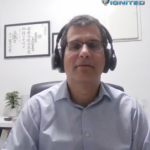
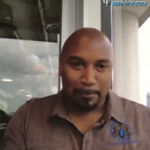
In this episode of Industry Ignited, host Dr. Leanne Aguilar speaks with Andrew Patrick, CEO of Eckert Machining Incorporated and a seasoned manufacturing executive with more than two decades of experience across the Silicon Valley supply chain. Their conversation makes one thing abundantly clear: culture isn’t soft — it’s strategic.
A Leadership Philosophy Forged Early
Andrew’s leadership philosophy was shaped early in his career by something many professionals never experience — a true mentor. Under the guidance of a leader who believed deeply in developing people, Andrew was introduced to foundational leadership frameworks long before they became mainstream in manufacturing.
From attending in-person leadership seminars in the early 1990s to learning directly from high-performing organizations, Andrew absorbed the idea that results come from people, not just processes. More importantly, he was given permission to learn, experiment, and even fail — without fear.
That psychological safety became the cornerstone of how he would later lead teams himself.
The Frameworks That Changed Everything
Andrew points to several classic but often underutilized leadership models that fundamentally shaped his approach.
One is Tuckman’s stages of group development — forming, storming, norming, and performing. Understanding that resistance and conflict are not signs of failure, but predictable phases of growth, allowed Andrew to lead through turbulence instead of reacting to it.
Another is Maslow’s hierarchy of needs, which Andrew argues is one of the most powerful — and most misunderstood — tools in leadership. When employees operate in fear, they become invisible, risk-averse, and disengaged. But when they feel seen, heard, and valued, motivation rises naturally.
The combination of these frameworks helped Andrew unlock what many organizations miss: high performance is an emotional outcome, not just a mechanical one.
The Hidden Competitive Advantage
Early in his career, Andrew noticed something striking. His company and its competitors had access to the same equipment, the same customers, and the same opportunities — yet performance results weren’t even close.
The difference wasn’t technology.
It was how teams were developed and led.
By focusing on teamwork, recognition, and leadership consistency, Andrew’s organization quietly outperformed others — so much so that they deliberately avoided publicizing their approach. At the time, people-centric leadership wasn’t widely embraced in manufacturing, and certainly not seen as a competitive advantage.
Today, Andrew knows better: culture is the advantage competitors struggle most to copy.
Why Turnarounds Start at the Top
After becoming known as a go-to leader for transforming large machine shops, Andrew began to see the same patterns repeated in struggling organizations.
The most common issue?
Lack of management unity.
When senior leaders aren’t aligned — when they send mixed messages or operate with conflicting philosophies — the entire organization absorbs that inconsistency. Systems break down. Accountability weakens. Performance plateaus.
Andrew is clear: meaningful transformation begins by aligning leadership around shared vision, values, and behavior. Until leaders are rowing in the same direction — and modeling that alignment through action — cultural change cannot take hold.
Culture Change in Action: A Defining Moment
One of the most powerful stories Andrew shares comes from his turnaround of TC Industries Europe, where productivity eventually quadrupled with no capital investment.
When he arrived, something shocked him:
In a company of 250 people, leadership had never held a team meeting in over 20 years.
Supervisors had been promoted for technical skill, not people leadership. Coaching, recognition, and accountability simply didn’t exist. Andrew’s first move wasn’t to overhaul systems — it was to develop leaders.
Regular meetings, leadership training, visible presence on the shop floor, and simple human connection — greeting people in the morning, learning names, listening — slowly began to shift the environment.
One moment stood out. When Andrew publicly recognized a maintenance worker for taking initiative over a weekend, the employee broke down in tears, admitting he had never been treated with respect at work before.
That single moment rippled through the culture.
Recognition as a Force Multiplier
Andrew emphasizes that recognition doesn’t need to be expensive or grand — but it must be sincere and consistent.
A handshake.
A thank-you.
A handwritten birthday card.
A public acknowledgment of effort.
These small deposits into what Andrew calls the “emotional bank account” create trust, motivation, and pride. When leaders only make withdrawals — criticism, blame, pressure — people retreat into fear. But when leaders invest emotionally, performance follows.
Over time, the impact became measurable. Absenteeism dropped from over 12% to zero. Productivity surged. Employees didn’t just show up — they wanted to be there.
Balancing Lean, Data, and Humanity
Andrew doesn’t dismiss systems, metrics, or Lean principles — far from it. He believes sustainable excellence requires both strong management discipline and strong leadership behavior.
Empowerment without training leads to chaos. Data without engagement leads to apathy. True performance comes when people understand the system, see the numbers visually, and feel emotionally invested in improving them.
Leadership and management aren’t opposites — they are complementary skills that must be developed together.
Ownership Changes Everything
Becoming the owner of Eckert Machining gave Andrew a new perspective. Financial discipline matters. Profit enables investment in training, technology, and people.
Leadership, he notes, is hard work — which is why truly great workplaces are rare. Blame-and-punish cultures are easy. Supportive, people-centered cultures require courage, patience, and integrity.
But the payoff is undeniable: lower turnover, higher productivity, stronger customer relationships, and organizations that outperform even in commoditized markets.
The Core Advice for Leaders Facing Resistance
Andrew leaves leaders with a powerful reminder:
Don’t take resistance personally.
Criticism is rarely about you — it’s about what you represent. Stay focused. Act with integrity. Model the behavior you expect. Own mistakes. Listen deeply. Stand by your leaders when they face pushback.
Culture doesn’t change overnight — but actions, repeated consistently over time, will always win.
Listen to the Full Conversation
This blog captures only part of a deep, practical, and inspiring conversation on leadership, culture, and operational excellence.
🎧 Listen to the full episode of Industry Ignited featuring Andrew Patrick to hear the real stories, hard-earned lessons, and leadership wisdom behind transforming manufacturing through people.
👉 Visit the podcast to listen:
https://www.buzzsprout.com/2514972/episodes/18525385
If you enjoyed this episode, be sure to subscribe and tune in for more conversations with leaders who prove that culture is strategy. Until next time — stay bold, stay curious, and keep igniting industry. 🔥
Interested in being featured on the podcast? Contact: podcast@industryignited.com