The Invisible Chokehold: Why We Can’t Build the Future Without Winning the Critical Materials War
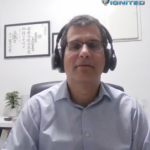
Mike Riley on Out-Innovating Geopolitics, Upgrading the Grid, and Rethinking Eco-Ethics
What if the biggest bottleneck to renewable energy isn’t technology, but the material supply chain we’ve outsourced?
We often talk about the clean energy transition as if the hardest part is designing a better battery or a more efficient solar panel. But as Mike Riley, founder and CEO of NextGen Materials, points out, we are ignoring the foundation. We’ve decided we want to dominate the “croissant bakery” business without realizing that another country controls all the specialized flour and sugar.
In this episode of Industry Ignited, Dr. Leeanne Aguilar speaks with Mike about the harsh realities of critical materials processing, the geopolitical risks of the current supply chain, and why the next trillion-dollar opportunity lies in upgrading our fragile power grid.
From Wireless Broadband to Lithium Processing
Mike’s career is defined by a love for solving the “impossible.” After successfully scaling an IT hardware company from $900 million to $1.86 billion by tackling complex server problems, he was drawn to the critical materials space. Why? Because it’s a physical reality that can’t be disrupted by a better algorithm.
His journey began with an introduction to Halloysite and Silicon Carbide, which eventually led him into the world of Lithium Ferrous Phosphate (LFP) batteries. As he dug deeper, he realized a glaring vulnerability: the US might be pulling battery cell manufacturing home, but the processing of the raw materials used to make those cells is overwhelmingly dominated by China.
- The Pinch Point: China currently controls roughly 67% of lithium processing, 66% of synthetic graphite, and a staggering 93% of anode materials.
The Strategy: Co-Opting Scale Instead of Building It
In the startup world, the default goal is often to become the “Amazon” of a sector—raising massive VC funds and operating at a loss for years to achieve scale.
Mike’s approach with NextGen Materials is entirely different. He recognizes that scaling industrial processing requires navigating massive capital requirements, OSHA regulations, and immense hiring challenges. Instead of competing with multi-billion-dollar chemical giants, NextGen innovates the core technology and partners with them.
For example, their lithium extraction methodology piggybacks on the existing chlor-alkali process (which produces caustic soda). By integrating their technology with players like Tata Chemicals or Dow who already understand scale, NextGen can compete with China in two years rather than ten.
DLE 2.0: Plucking Lithium, Not Evaporating It
Historically, lithium extraction has relied on massive evaporative ponds in some of the driest places on Earth (like the Salar de Atacama in Chile). This method requires up to 1,000 tons of water per ton of lithium and takes an immense amount of time.
Direct Lithium Extraction (DLE 1.0) improved this by using electrochemical processes to reduce water usage to 20-50 tons. However, it introduced harsh chemical effluents.
NextGen Materials is pioneering a continuous flow process that doesn’t try to remove everything that isn’t lithium; it simply “plucks” the lithium directly from the brine. The result?
- Faster: A patented continuous flow process rather than batch processing.
- Cleaner: Drastically fewer harsh chemical runoffs.
- Incredibly Water Efficient: Projected to use roughly 1 ton of freshwater per 10 tons of lithium.
The Trap of “Perfect” Eco-Ethics
One of NextGen’s core mantras is to be the most eco-ethical option in the market. But Mike is candid about how difficult this is to execute—not because of the engineering, but because of unrealistic expectations.
“Rhetoric is easy. Engineering is hard.”
He points out that the market often demands perfection (zero energy use, zero waste) while ignoring the environmental costs of their own daily conveniences (like smartphones and EVs). He also warns against buying into the hype of recycling as a near-term savior. While the narrative that “we recycle 50% of our plastics” was pushed by petrochemical companies to maintain consumption (the reality is closer to 3%), similar hype exists around battery recycling. Because EV batteries have lucrative secondary lives (like grid storage) after dropping to 80% capacity, we will need to pull new materials out of the ground for decades to meet demand.
The $25 Trillion Opportunity: The Grid
When asked where an ambitious 30-year-old should focus their energy today, Mike doesn’t hesitate: The Grid.
The US power grid is largely running on 50-year-old technology, with transformers built the same way they were a century ago. As AI and EVs drive power demand to unprecedented levels, upgrading generation and transmission is a $7 trillion to $25 trillion problem.
Mike advises innovators to stop building “dog walking apps” and instead focus on solving power inefficiencies. Whether you are a software developer writing code to minimize transmission loss, or an HR professional training the next generation of industrial electrical engineers, the opportunities in grid modernization are limitless.
🎧 Listen to the Full Episode
This blog only scratches the surface of the geopolitical dynamics of synthetic graphite and the economics of natural gas peaker plants versus Battery Electric Storage Systems (BESS).
To hear the full breakdown of how to out-innovate the global supply chain, listen to this episode of Industry Ignited.
👉 Visit the podcast and listen here:
And as always—stay bold, stay curious, and keep igniting industry.
Interested in being featured on the podcast? Contact: podcast@industryignited.com