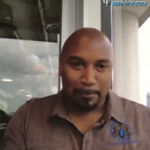
Finding a Way or Making One: How U.S. Biologic Is Redefining Disease Prevention
The greatest innovations often come from those willing to bridge worlds that rarely speak the same language—science, business, policy, and industry. Few leaders embody that translator role better than Chris Przybyszewski, whose career spans neuroscience, public health, medical devices, high tech, and now, as an executive at U.S. Biologic, the fight against infectious disease.
In his conversation with Dr. Leeanne Aguilar on Industry Ignited, Chris shared how his diverse journey shaped his leadership style, why communication is the hidden key to innovation, and how his team is pioneering new approaches to global disease prevention.
From Neuroscience to Global Health
Chris began his career in neuroscience research before moving into university administration, public health, and the medical device industry. Each step expanded his perspective on how experts—from surgeons to economists to engineers—approach problems with their own definitions, priorities, and languages.
That experience led him to embrace the role of translator. “A physician and a scientist might use the same words—like efficacy or safety—but mean very different things,” he explains. “My job as a leader is to align on the goal, create shared definitions, and keep everyone moving together on time and within budget.”
The Power of Alignment
At the intersection of science and business, Chris learned that alignment is everything—especially when working with investors, regulators, or government agencies.
Venture capitalists want ROI for their limited partners.
Government funders want metrics that justify congressional appropriations.
Foundations want their mission advanced.
“The goals are different, but the principle is the same: don’t waste their time, and show them how your work helps achieve their mission,” Chris says.
A Mindset for Breakthroughs
Chris’s favorite quote—“I shall either find a way or make one”—guides his approach. “If the goal is that important, then you commit. You’ll either find a way or make one. Failure isn’t the end—it’s part of the process.”
This mindset fueled U.S. Biologic’s pioneering work on orally delivered vaccines, particularly for Lyme disease. Recognizing that 75% of cases come from backyards where ticks feed on infected mice, his team engineered a novel pellet-based vaccine for wildlife—safe, thermostable, effective, and distributed via pest management networks.
“It’s the first time vaccines have been delivered to your backyard,” Chris notes. “Philosophically and practically, that’s a game-changer.”
Innovation as Supply Chain
Surprisingly, Chris describes vaccine innovation less like lab science and more like supply chain management. From designing chemical matrices to survive the digestive tracts of mice, to creating modular spray systems and timed application stations, the challenge is delivering prevention before disease spreads.
“We call ourselves a delivery company,” he says. “Agnostic to animal, disease, or antigen. It’s all about getting the right biologic to the right place, at the right time.”
Beyond Healthcare: Global Impact
With 75% of emerging infectious diseases originating in animals, Chris believes prevention at the source is essential not only for public health but for economies and societies worldwide. COVID-19, he points out, was a stark reminder of the trillions lost when zoonotic diseases reach humans.
“If we don’t address diseases where they start—in animals—we’re going to keep repeating the same cycles,” he warns.
The Future: AI and Rapid Response
Looking ahead, Chris sees AI as a transformative force in biotechnology. From predicting antigens to mapping regulatory pathways, AI could cut months off vaccine development. “It won’t replace validation,” he says, “but it will reduce guesswork and accelerate response.”
Lessons for Leaders
For Chris, innovation leadership boils down to humility and perseverance:
Accept that you’re wrong. Innovation means mistakes—own them, learn, adapt.
Don’t chase too many paths. Make a choice, go deep, and commit.
Stay effective, not just right. Ego blocks solutions; focus on outcomes.
As he puts it:
“Innovation is humbling. You have to believe in yourself while feeling inadequate at the same time. But if the goal matters, you’ll find a way—or make one.”
Listen to the full episode.
Interested in being featured on the podcast? Reach out to podcast@industryignited.com