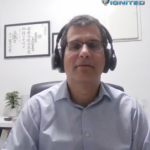
Nature’s R&D: How Sidney Rostan is Scaling Biomimicry for Industrial Innovation
What if the next major breakthrough in materials, energy efficiency, or AI isn’t something we invent from scratch, but something nature has already optimized over millions of years, just waiting for us to translate it?
That was the central theme of this episode of Industry Ignited, where Dr. Leeanne Aguilar sat down with Sidney Rostan, founder and CEO of Bioxigy, France’s leading biomimicry R&D design office. From automotive beginnings to leading industrial breakthroughs, Sidney offers a masterclass in how nature’s wisdom is becoming a core component of modern corporate strategy.
Bridging the Gap: From Academia to Industrial Application
While biomimicry has long thrived in academic research, Sidney identified a significant “downhill” gap where corporate R&D lacked systematic access to these nature-inspired solutions. Bioxigy was founded to bridge this, moving beyond theoretical interest to practical, industrial-scale application.
The Credibility Hurdle
When engaging with large industrial players, Sidney faced two primary challenges:
- The Founder’s Background: As a business school graduate rather than an engineer, Sidney initially faced skepticism when proposing technical interventions to established industry veterans.
- The “Arrogant” Engineering Mindset: Convincing engineers with decades of experience that nature—rather than traditional, human-centric industrial evolution—might hold superior solutions required dismantling a long-held perception that human technology is inherently better than nature’s “frugal” designs.
Strategic Implementation and Success
To ensure success and build long-term trust, Bioxigy focuses on three distinct areas of intervention:
- Incremental Innovation: Optimizing existing technologies to improve performance, such as reducing weight, heat dissipation, or sound vibration.
- Process Improvement: Reducing the “total cost” by optimizing manufacturing systems, such as lowering energy consumption in industrial mixing tanks, which directly addresses corporate bottom lines.
- Creative Disruption: Addressing functions in entirely new ways to solve complex challenges like material recyclability or energy efficiency where traditional methods have plateaued.
Biomimicry and AI
A significant growth area for Bioxigy is the development of bio-inspired algorithms. Inspired by the efficient processing capabilities of insect brains (such as the dragonfly), Bioxigy works to:
- Reduce Computational Power: Mimicking how living organisms filter noise from valuable information to perform complex tasks with minimal energy usage.
- Improve Reliability: Enhancing the safety and autonomy of drones, cars, and other automated systems.
Key Drivers for Adoption
According to Sidney, industrial adoption of biomimicry is rarely driven by philosophy alone. It is primarily driven by:
- Urgent Pain Points: Regulations (such as those from the European Union) that create clear, time-sensitive bottlenecks for businesses.
- Competitive Advantage: When companies utilize Bioxigy to achieve incremental performance gains that keep them ahead of their market rivals.
- Deepened Relationships: Once the initial “must-have” problems are solved, partners often return to explore “nice-to-have” innovations related to sustainability and disruption.
Interested in more industry insights? Listen to the full episode here:
https://www.buzzsprout.com/2514972/episodes/19273746
Are you looking to integrate biomimicry into your current R&D projects, or are you more interested in the potential of bio-inspired AI for your specific industry?
Interested in being featured on the podcast? Contact: podcast@industryignited.com