From Burnout to Gold Medals: How an Olympic Mindset is Fixing Pharma’s Performance Crisis
Scaling Excitement to Drive Excellence with Dr. Tim Mikhelashvili
What if the life sciences industry measured performance the way Olympic athletes do? Imagine a workplace where every decision, every unseen habit, and every rep adds up to a predictable win—not just a quarterly sales figure.
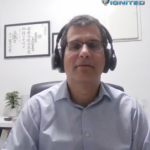
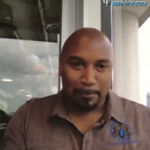
In this episode of Industry Ignited, Dr. Leeanne Aguilar sits down with Dr. Tim Mikhelashvili, a Doctor of Pharmacy and CEO of Amedea Pharma. Together, they explore a radical idea: that the cure for the industry’s burnout and lack of accountability isn’t more pressure, but a shift toward the transparency, data, and “sportsmanship” found in elite athletics.
From the Pharmacy Counter to Industry Reform
Tim’s journey didn’t begin in a boardroom; it began with a disturbingly real look at the industry’s flaws. As a pharmacy student, he watched a 60 Minutes broadcast exposing unsanitary drug manufacturing conditions and recalls. It was a wake-up call. He realized that dispensing medications wasn’t enough; he had to influence how they were made and managed.
He successfully petitioned his pharmacy school to create a first-of-its-kind industrial fellowship, launching a 21-year career spanning major therapeutic areas like cardiology, oncology, and rare disease. But as he climbed the ladder, he noticed a new problem: a disconnect between talent and motivation.
The Core Insight: The “Deep Metrics” Crisis
Tim’s research revealed a startling statistic: 70% of medical affairs teams do not analyze how their activities drive outcomes. Even worse, nearly 60% don’t believe metrics drive decisions at all.
The industry is data-rich but insight-poor regarding its own people. Tim argues that traditional KPIs focus entirely on lagging indicators (sales) while ignoring leading indicators (behaviors and workflows). To solve this, he developed the concept of “Deep Metrics”—a continuous cycle of quality improvement.
This model moves beyond simple checklists to measure the “unseen” factors that Edward Deming famously called unknowable but vital—factors like collaboration, trust, and response time.
The Challenge: Redefining Accountability
In most corporate cultures, “accountability” is a synonym for “blame.” This fear creates silence, hides mistakes, and stifles innovation.
Tim’s approach flips the script. He believes accountability must be distributed, not top-down. By using his platform, Ancora, he connects Purpose, Progress, and Reward.
He shares a case study of a startup overwhelmed by medical inquiries. By visualizing the data and distributing accountability between the field team (MSLs) and the home office, they reduced response times from 4.9 days to 2.2 days—a 150% efficiency boost without hiring new staff. The transparency turned a burden into a team sport.
Strategy: The 50/50 Sportsmanship Model
This is where the Olympic metaphor becomes a management methodology. In sports, if you score a goal using an illegal move, the goal doesn’t count, and you go to the penalty box. In corporate pharma, toxic high-performers are often rewarded solely for the “goal,” regardless of the damage they do to the team.
Tim advocates for a 50/50 Performance Split:
- 50% Technical Results: Did you hit the number?
- 50% Behaviors (Sportsmanship): How did you achieve it?
This operationalizes culture. It treats the workplace like a relay race where passing the baton effectively is just as important as running fast.
Differentiator: AI with a Human Pulse
As the industry rushes toward “Agentic AI” (AI that acts autonomously), Tim sounds a note of caution. While Agentic AI can determine the “Next Best Action,” it lacks the context of human dynamics.
Amedea Pharma’s approach differentiates itself by offering Governance and Explainability. Instead of letting an algorithm blindly direct workflow, their technology acts as a decision assistant that factors in behavioral metrics and human context, ensuring that efficiency doesn’t come at the cost of team cohesion.
Conclusion: Making Work Exciting Again
Dr. Tim Mikhelashvili’s vision is bold but simple: he wants to make work in healthcare exciting again. By applying the transparency of the Olympics and the precision of data science, leaders can replace burnout with the thrill of competition and the satisfaction of true progress.
When teams know the rules, trust the scoring, and see their impact, they don’t just work harder—they work like champions.
🎧 Listen to the Full Episode
This blog only scratches the surface of Tim’s “Medical Innovation Olympics” and his specific strategies for avoiding burnout. To hear the full breakdown of how to turn your team into corporate athletes, listen to the full episode of Industry Ignited.
👉 Visit the podcast and listen here: https://www.buzzsprout.com/2514972/episodes/18460153
And as always—stay bold, stay curious, and keep igniting industry.
Interested in being featured on the podcast? Contact: podcast@industryignited.com