Turning Fragile Ideas into Life-Changing Drugs: The High-Stakes World of Pharma Manufacturing
Navigating Failure, Reshoring, and the 98% Drop-Out Rate with Robert Poe of Olon USA
What does it take to turn a fragile idea in a lab into a life-changing drug in the real world? And how do you lead a team when the industry standard involves a failure rate of nearly 99%?
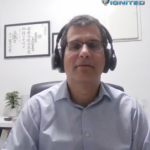
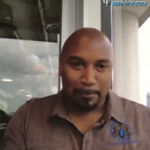
In this episode of Industry Ignited, Dr. Leeanne Aguilar sits down with Robert Poe, President and CEO of Olon USA, to explore the complex ecosystem of early-stage drug development. From his roots as a combat medic to leading a major pharmaceutical manufacturing site, Rob shares his insights on leadership, the push for reshoring, and why failure is just a necessary step toward success.
From Boy Scouts to the Boardroom
Robert Poe’s leadership philosophy wasn’t forged in a business school, but in the Boy Scouts (now Scouting America). He credits his ability to lead small groups and problem-solve to those early experiences, where resourcefulness meant building towers out of sticks and rope.
His career path was equally non-linear, moving from combat medic to maintenance, and eventually shifting from bench chemistry to management when he realized he was energized by team dynamics and strategy. Rob emphasizes the importance of mentors who gave him the opportunity to learn and, crucially, allowed him to fail.
The Business of Failure: 98% Attrition
To the outsider, pharmaceutical development can seem like magic. Rob describes it as using “chemical Lego blocks” to build specific molecules. However, the reality of bringing a new drug to market is grueling:
- The Funnel is Steep: You might start with 5,000 drug targets, narrow it down to 200 for preclinical studies, and see only two make it to Phase 1 trials.
- The Cost is High: Developing a new chemical entity from concept to market can take 5 to 10 years and cost between $300 million and $2 billion.
- The Role of the Manufacturer: Olon USA steps in to help companies “raise their baby,” taking early-stage molecules and scaling them up for clinical trials and commercial production.
The Challenge: Reshoring US Supply Chains
A major theme of the conversation is the push to bring pharmaceutical manufacturing back to the United States. Stemming from supply chain shortages during COVID, there is a renewed focus on protecting the US supply chain from foreign government weaponization.
Rob notes that Olon USA is actively investing $11 million to install larger capacity reactors to support a European customer committed to making their product in the US. While reshoring comes with increased labor costs and liabilities, Rob argues it is necessary to secure domestic drug availability.
Strategy: The Chef vs. The Fry Cook
In the world of contract manufacturing (CDMO), Rob distinguishes Olon USA by refusing to be a commodity vendor.
“We want to be the chef, helping them design the menu and put out the good work.”
He explains that a “fry cook” contractor just does exactly what they are told. But in research science, things go wrong. An expert partner stops when they see a trend failing, has a conversation with the client, and proposes a fix rather than blindly following a doomed recipe.
Leadership That Walks the Floor
Despite the high-tech environment, Rob’s leadership approach remains grounded in the “Golden Rule”—treating everyone with respect, from the cleaning staff to the executives.
He is a proponent of “management by walking around.” By physically walking the site and talking to employees, he discovered that the number one complaint wasn’t about chemistry or equipment, but that the parking lot lights were out, forcing staff to walk in the dark. He fixed it immediately—a small win that boosted morale and proved that leadership was listening.
A Vision for Sustainable Research
Rob also proposes a creative solution for funding the high-risk world of early-stage research. He suggests that if a drug is developed using public grant money (NIH), a small percentage of its commercial success should flow back into the fund. This feedback loop would fund further research without increasing the tax burden on the public.
🎧 Listen to the Full Episode
This blog only scratches the surface of Rob’s insights on managing stress through nature, the intricacies of “orphan drugs,” and the future of US manufacturing.
To hear Robert Poe share practical lessons on leadership, resilience, and the chemistry of business, listen to the full episode of Industry Ignited.
👉 Visit the podcast and listen here: https://www.buzzsprout.com/2514972/episodes/18490300
And as always—stay bold, stay curious, and keep igniting industry.
Interested in being featured on the podcast? Contact: podcast@industryignited.com